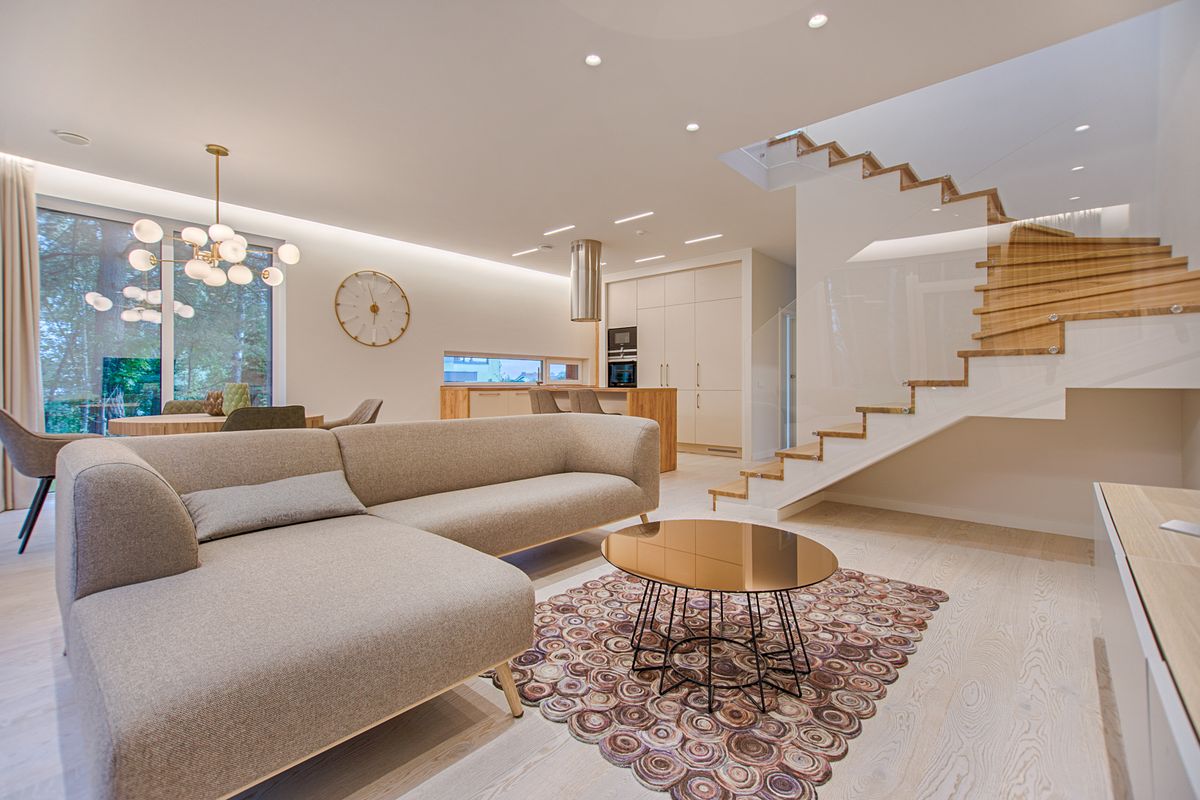
The traditional home staging industry, valued at over $2.7 billion annually, is experiencing a technological revolution that's reshaping how properties are presented to potential buyers. Real estate agents are increasingly turning to artificial intelligence to create compelling visual narratives that help homes sell faster and for higher prices, often reducing staging costs by up to 80% while expanding creative possibilities beyond physical limitations.
The Economics of AI-Powered Staging
Traditional home staging typically costs between $2,000 to $6,000 per month, with luxury properties often requiring $10,000 or more in furniture rental and professional design services. AI staging platforms offer a dramatically different value proposition, with most services ranging from $25 to $150 per room for high-quality renderings that can be completed within hours rather than weeks.
The speed advantage is particularly compelling in hot real estate markets. Where traditional staging might require 7-14 days to coordinate furniture delivery, arrangement, and photography, AI staging can transform empty rooms into beautifully furnished spaces overnight. This rapid turnaround allows agents to list properties immediately while maintaining visual appeal that drives buyer engagement.
Market Performance Data
Properties featuring professionally staged imagery—whether physical or AI-generated—consistently outperform unstaged listings. Recent market analysis shows staged homes sell 73% faster than non-staged properties and command prices 6-20% above comparable unstaged homes. AI staging maintains these performance benefits while offering additional flexibility to target specific buyer demographics through varied design styles.
Implementation Strategies for Real Estate Professionals
Successful AI staging begins with high-quality photography of empty spaces. Professional photographers should capture rooms with optimal lighting, ensuring all windows and architectural features are clearly visible. These base images serve as the foundation for AI transformation, making initial photo quality crucial for realistic results.
Agents should develop a systematic approach to room prioritization. Living rooms, master bedrooms, and kitchens typically generate the highest return on staging investment, as these spaces strongly influence buyer emotions and purchase decisions. Secondary areas like guest bedrooms and home offices can be staged selectively based on target market preferences and listing price points.
Style Selection and Market Alignment
Different markets respond to varying aesthetic approaches. Urban properties often benefit from contemporary or minimalist staging that emphasizes clean lines and modern functionality. Suburban family homes typically perform better with transitional styling that balances comfort and sophistication. Luxury properties may warrant more dramatic or unique design approaches that differentiate them from standard market offerings.
Advanced AI room design tools like RemodelAI allow agents to experiment with multiple design styles for the same space, enabling A/B testing of listing photos to optimize market response. This capability is particularly valuable in diverse markets where buyer preferences span multiple demographic segments.
Technical Considerations and Quality Control
The effectiveness of AI staging depends heavily on technical execution. Images should maintain consistent lighting and perspective throughout the listing to create a cohesive visual narrative. Furniture placement must respect room proportions and traffic flow patterns that buyers intuitively expect.
Quality control protocols should include verification of scale accuracy, lighting consistency, and style coherence across all staged rooms. Professional review ensures that AI-generated elements integrate seamlessly with existing architectural features and don't create unrealistic expectations about room dimensions or functionality.
Disclosure and Transparency
Ethical implementation requires clear disclosure that images feature virtual staging. Most MLS systems now include specific fields for noting digital staging, and best practices suggest including disclosure language in listing descriptions. This transparency actually enhances credibility while allowing buyers to envision the property's potential without confusion about included furnishings.
Advanced Applications and Future Trends
Forward-thinking agents are expanding beyond basic furniture placement to incorporate lifestyle-specific staging. Properties targeting remote workers might feature dedicated office spaces with professional video conferencing setups. Family-oriented listings could emphasize mudroom organization and homework stations that resonate with parent buyers.
Seasonal staging variations are becoming increasingly sophisticated, allowing the same property to be presented with different seasonal decor to maintain listing freshness over extended marketing periods. This approach is particularly valuable for luxury properties or challenging markets where extended listing periods are common.
Measuring ROI and Performance Optimization
Successful AI staging programs require systematic performance tracking. Key metrics include time on market, showing request frequency, and final sale prices compared to unstaged comparable properties. Digital engagement metrics like listing view duration and photo click-through rates provide additional insights into staging effectiveness.
The data-driven nature of AI staging enables continuous optimization based on market feedback. Agents can track which design styles generate the most interest and adjust their staging approach accordingly, creating increasingly effective visual marketing strategies over time.
As AI technology continues to evolve, real estate professionals who master these tools will maintain significant competitive advantages in an increasingly visual marketplace. The combination of cost efficiency, speed, and creative flexibility positions AI staging as an essential component of modern real estate marketing, transforming how properties are presented and ultimately helping both agents and sellers achieve superior market results.