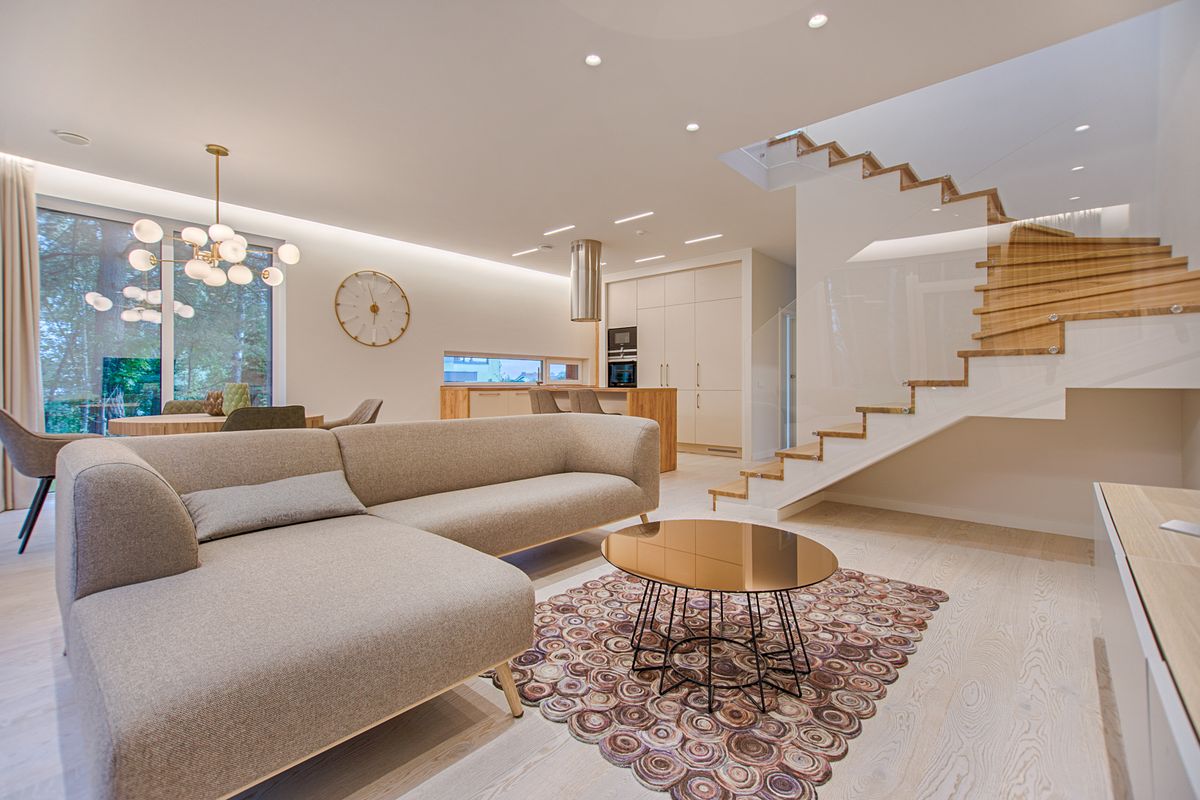
The bedroom occupies a curious position in the American home: it is simultaneously the most private room and, for many homeowners, the least designed. We labor over kitchen backsplashes and living room sectionals, then relegate the space where we spend a third of our lives to whatever furniture survived the last move. This is a mistake. A well-considered bedroom does more than look good in photographs—it measurably improves sleep quality, morning routines, and the general sense that one's home reflects one's life rather than merely housing it.
Defining Your Bedroom's Point of View
Before selecting a single paint chip, it helps to name the mood you're chasing. "Cozy" and "contemporary" are often treated as opposites, but the most successful bedrooms borrow from both: the warmth of the former, the restraint of the latter. Cozy without structure becomes clutter. Contemporary without warmth becomes a hotel lobby.
- Cozy-leaning: layered textiles, warm wood tones, low ambient lighting, curved furniture edges.
- Contemporary-leaning: a limited material palette (2-3 finishes maximum), architectural lighting, negative space around furniture.
- The hybrid approach: a neutral, minimal shell—think plaster-toned walls and clean-lined furniture—layered with tactile elements like a bouclé throw, a vintage rug, or linen bedding.
Start With Light, Not Paint
Lighting design is the most underused lever in bedroom renovation, largely because homeowners default to a single overhead fixture and call it done. A single ceiling light creates flat, clinical illumination—precisely the opposite of restful. Instead, plan for three light layers: ambient (ceiling or cove lighting), task (bedside reading lamps or wall-mounted sconces), and accent (a floor lamp in a reading nook, LED strips behind a headboard).
Swapping a single flush-mount fixture for a layered lighting plan typically costs between $600 and $2,500 depending on whether electrical work is required, but the return on ambiance is disproportionate to the spend. Dimmable warm-white bulbs (2700K–3000K) are non-negotiable; cooler tones above 3500K read as office lighting, not bedroom lighting.
Sconces Over Nightstand Lamps
Wall-mounted sconces flanking the bed free up nightstand real estate and create a more architectural, considered look. Installation runs $150–$400 per fixture including labor, but the visual payoff—symmetry, reduced clutter, better reading angles—makes this one of the highest-impact changes available for the price.
The Headboard Wall Is Your Focal Point
Every bedroom needs a visual anchor, and in most floor plans, that's the wall behind the bed. This is where designers recommend spending disproportionately, whether through a statement headboard, a textured wallcovering, or millwork paneling. Board-and-batten or shiplap paneling costs roughly $8–$18 per square foot installed and instantly elevates a builder-grade room into something that reads custom.
For renters or those hesitant to commit, a large piece of art, a fabric wall hanging, or even a bold paint color confined to that single wall can achieve a similar anchoring effect for under $300.
Material and Color Decisions That Age Well
Trend cycles move faster in bedrooms than almost any other room, largely because bedding and accessories are easy to swap. The furniture and finishes, however, should be chosen for longevity. Warm neutrals—greige, clay, soft taupe—continue to outperform saturated trend colors in resale value, according to most real estate design surveys, though a deep, moody color like forest green or ink blue on just one wall has become a favored move among designers precisely because it feels intentional without overwhelming the room.
- Choose wood tones (nightstands, bed frames) in a single family—all warm oak, or all walnut—rather than mixing undertones.
- Limit metal finishes to one or two: matte black and brushed brass can coexist, but three or more finishes starts to look accidental.
- Reserve high-contrast patterns for pillows and throws, which cost far less to replace than upholstered furniture.
Testing Ideas Before You Commit
One of the more useful developments in residential design over the past few years has been the rise of visualization tools that let homeowners preview a room before spending a dollar on materials. Uploading a photo of an existing bedroom into RemodelAI and generating alternate palettes, furniture arrangements, or lighting schemes can shortcut what used to be weeks of swatch-collecting and Pinterest boards, particularly useful for homeowners torn between a cozy, textural direction and something more streamlined and contemporary.
Small Space, Same Ambition
Not every bedroom accommodates a reading nook or a statement wall. In smaller rooms—say, under 120 square feet—the priority shifts to multiplying function without visual noise: a bed frame with built-in storage, a wall-mounted folding desk, mirrored closet doors to expand perceived space. Vertical storage, rather than wide dressers, preserves floor area and keeps sightlines open, which matters more to the feeling of spaciousness than square footage alone.
The Bottom Line
A bedroom renovation doesn't require gutting the room to the studs to feel transformative. The most effective changes—layered lighting, a considered focal wall, a disciplined material palette—are modest in scope but

