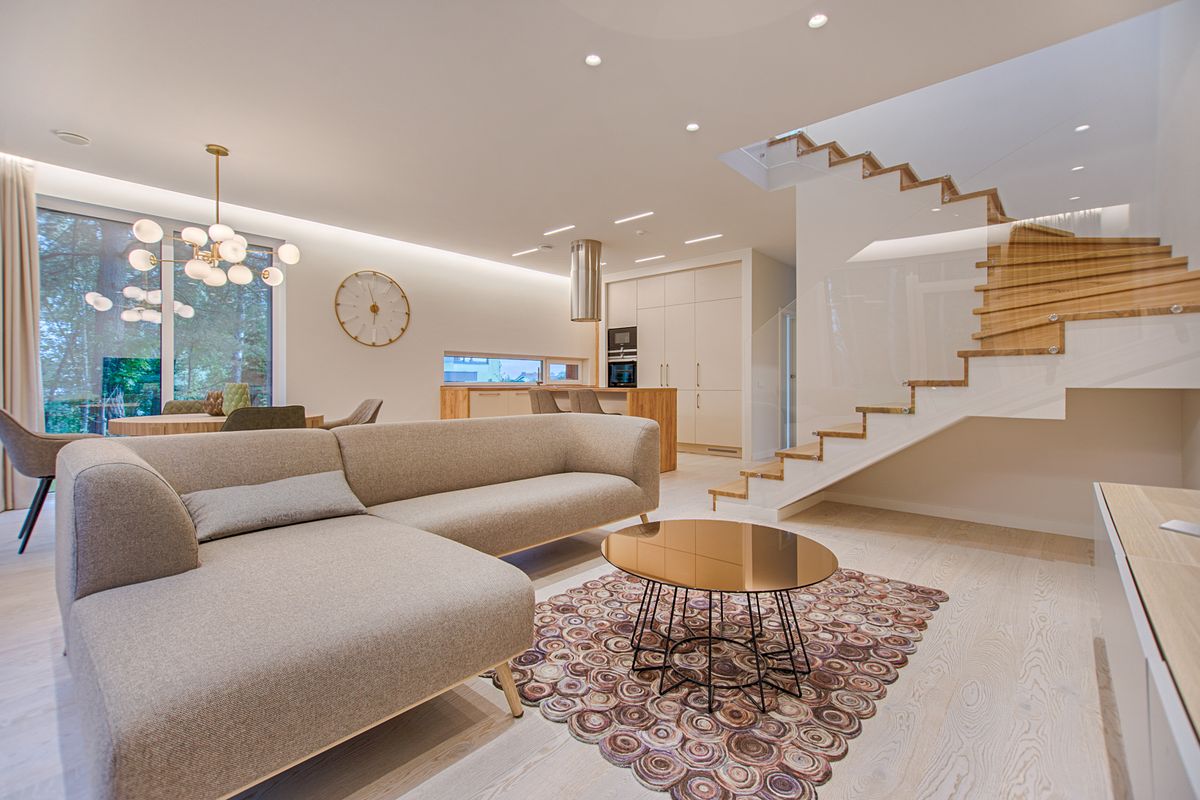
There's a reason Japandi has held its cultural moment far longer than the average design trend cycle. Born from the quiet marriage of Japanese minimalism and Scandinavian hygge, it offers something rarer than beauty alone: a sense of calm that feels lived-in rather than staged. In a design landscape that has cycled through maximalism, farmhouse fatigue, and the sterile white-box aesthetic of early minimalism, Japandi has emerged as the answer for homeowners who want serenity without sacrificing soul.
What Japandi Actually Means
Japandi isn't simply "beige minimalism," despite how often it's flattened into that shorthand online. It's the intersection of two design philosophies that, on paper, shouldn't work as neatly together as they do. Japanese design draws from wabi-sabi — the appreciation of imperfection, natural aging, and negative space — while Scandinavian design leans on hygge, prioritizing comfort, function, and coziness. Where Scandinavian interiors can tip into sterile white-on-white territory, and Japanese minimalism can feel austere to Western sensibilities, Japandi splits the difference. The result is a palette and philosophy grounded in restraint, but never coldness.
The Core Principles
- Natural materials over synthetic ones. Think oak, ash, bamboo, linen, wool, and stone rather than laminate, high-gloss lacquer, or synthetic velvet.
- Low, grounded furniture. Japandi favors pieces that sit closer to the floor — platform beds, low-slung sofas, and floor cushions — which visually expands a room and echoes traditional Japanese living.
- Muted, earthy palettes. Warm neutrals, charcoal, clay, sage, and soft black dominate, with color introduced sparingly through texture rather than pattern.
- Negative space as a design element. Empty space isn't a gap to be filled; it's intentional, giving the eye — and the mind — room to rest.
- Function-first objects. Every item earns its place. Decorative clutter is edited out in favor of a handful of well-made, purposeful pieces.
Where Homeowners Get It Wrong
The most common misstep is mistaking Japandi for generic minimalism — swapping in an all-white palette, glass tables, and calling it done. That reads more like a showroom than a home. Authentic Japandi requires warmth, and warmth comes from texture and imperfection: a hand-thrown ceramic bowl with visible glaze variation, a linen throw with natural creasing, wood grain left unpolished rather than sanded to a uniform sheen. Without these tactile, slightly irregular elements, a Japandi-inspired room can tip into the clinical territory it's meant to avoid.
The second mistake is over-editing. Japandi is minimal, but it isn't empty. A living room with a single sofa and nothing else isn't serene — it's underfurnished. The style calls for curated abundance: a few excellent pieces, thoughtfully placed, rather than a stripped-down void.
Practical Steps to Introduce Japandi at Home
You don't need a full gut renovation to shift a room toward Japandi. In fact, most of this style's power comes from editing what already exists rather than starting over.
- Start with a lighting audit. Swap harsh overhead lighting for warm-toned bulbs (2700K–3000K) and layer in floor and table lamps with paper or linen shades. This single change costs under $200 in most rooms and does more to establish mood than any furniture purchase.
- Introduce one statement wood piece. A solid oak coffee table or a low walnut console runs anywhere from $400 to $1,500 depending on craftsmanship, and it anchors the room's material palette instantly.
- Edit before you buy. Remove roughly 20–30% of visible decor from any room — this alone moves a space toward Japandi's negative-space principle without spending a cent.
- Invest in textiles. Linen curtains ($60–150 per panel), a wool area rug in a neutral tone ($300–900), and a few textured throw pillows do more to soften a minimalist room than any single furniture upgrade.
- Bring in a plant with structure. A single sculptural plant — a fiddle-leaf fig, a bonsai, or an olive tree — introduces organic life without visual clutter.
Testing the Look Before You Commit
Because Japandi lives or dies on subtle material and tone choices, it's a style that benefits enormously from visualization before purchase. Swapping a white oak floor for a darker ash tone, or testing a clay-colored accent wall against your existing furniture, can look dramatically different depending on your room's light exposure. This is where AI room design tools like RemodelAI have become genuinely useful for homeowners — uploading a photo of your actual space and testing Japandi-specific palettes, furniture layouts, and material swaps before committing to a $2,000 sofa or a full flooring replacement removes much of the guesswork that used to require a designer's retainer.
Japandi's staying power comes down to what it asks of a home: not perfection, but intention. It rewards homeowners willing to slow down, choose fewer things, and choose them well. Whether that means refinishing a single piece of furniture or reimagining an entire living room, the philosophy scales to any budget and any square footage. The goal was never to create